

Know exactly what you’re putting in, and on your body!
Organic September is an annual nationwide campaign run by The Soil Association to encourage people to try and choose organic alternatives and see the difference it can make.
The Soil Association is a UK charity joining forces with nature for a better future – a world with good health, in balance with nature and a safer climate. It is the country’s leading organic certifier, responsible for certifying around 70% of all organic produce in the UK…. From protecting nature and wildlife, to supporting high animal welfare and healthier soils, organic methods prove there’s a better choice for both people and planet.
What does Organic mean?
Organic is a system of farming and crop production that works with nature. Organic farmers aim to produce high-quality crops, using methods that benefit our whole food system, from people to planet, plant health to animal welfare.
Organic crops are grown and made without synthetic pesticides, artificial fertilisers, and genetically modified (GM) ingredients. Animals raised on organic farms have more space, greater access to the outdoors and higher welfare standards.
Organic farming must meet strict legal standards that protect:
soil
ecosystems and wildlife
animals
people
These standards are based on the four principles of organic:
health, ecology, fairness and care.
(The Soil Association)
What is Organic Certification?
When you buy certified organic products, you’ll see an organic certification symbol on the label. This means every step of the crop’s journey, from farm to shop, has been inspected and certified as organic. Organic certification bodies, such as the Soil Association, work with farmers and crop processors to make sure their products meet the organic standards, laid down in law.
To be certified organic, farms and food businesses must:
- follow legally defined organic standards
- keep detailed records of how a crop is produced
- have their farm, land and processes inspected at least once a year
- show full traceability from farm to finished product
Only products that meet these standards can use an organic certification symbol on their label. When you see this symbol, you can trust that the product has been independently checked and produced in a way that supports soil health, animal welfare and the environment.
All our organic products at Aqua Oleum are certified by the Soil Association and carry their logo. To be a certified organic business, we need to meet their strict standards and a representative from the Soil Association reviews our entire manufacturing process each year, which includes the sourcing of ingredients, formulation, packaging, storage and usage of premises.
As long-standing members of The Vegan Society too, none of our products are ever tested on animals.
Why choose Organic?
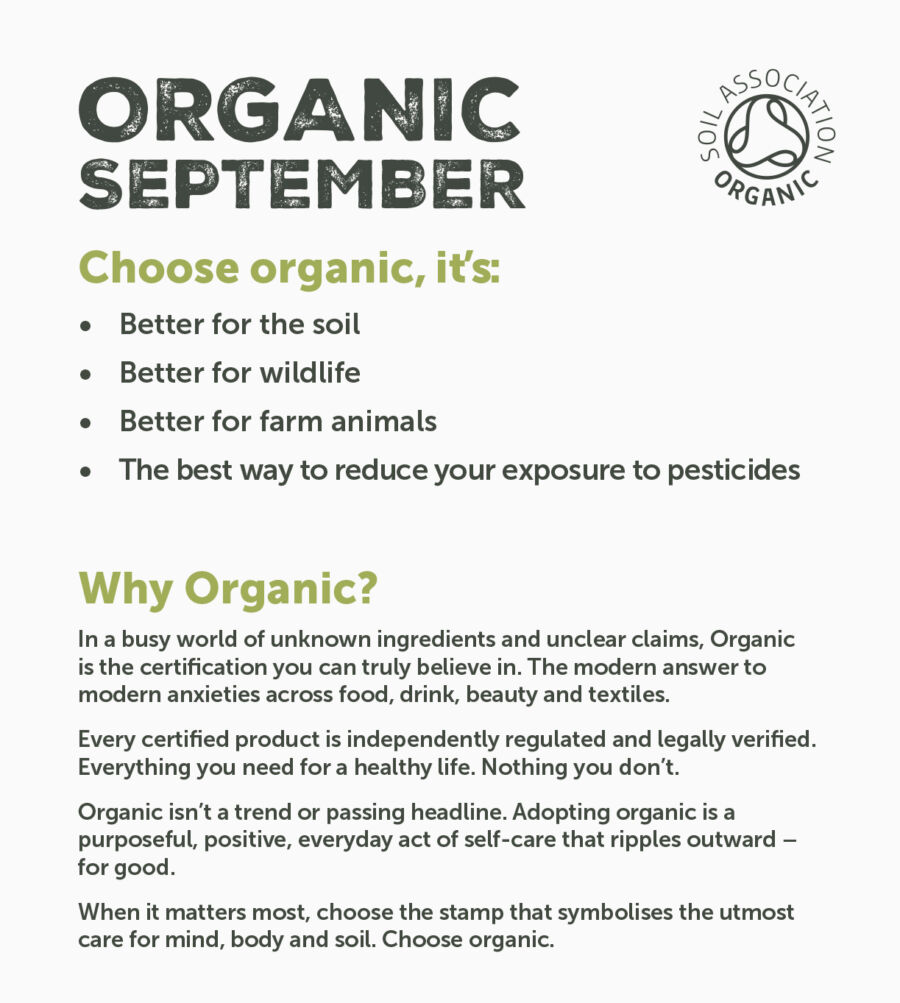
Choosing and buying organic is voting for a system that offers many benefits such as:
It’s better for the planet
Higher animal welfare standards
It’s better for nature & wildlife
It’s better for people
Designed to respect nature and to enhance the health of soils, water and air, organic farming is leading the way on sustainability.
41% of Britain’s wildlife species have declined since 1970, and more than 1 in 10 are currently facing extinction. Intensive farming practices, especially pesticide use, have been identified as the main driver of these declines, but organic farming offers an alternative.
Organic farms are havens for wildlife and provide homes for bees, birds and butterflies. Organic farms have on average 30% more biodiversity.
Because organic farmers rely on healthy ecosystems to control pests and protect their soils, they tend to farm in a way that encourages wildlife, like planting trees, ‘beetle banks’ and wildflower margins, and digging ponds around their fields. This means organic farms are more ecologically diverse.
Organic farming joins the dots between our own health and the health of our planet, our animals and our wildlife by:
- Fewer pesticides
- Fewer additives and preservatives
- No GM ingredients
- Reduced use of antibiotics
- More resilient farms
- Nutritionally different food
The health of soil, plant, animal and man is one and indivisible
(Albert Howard)
What’s the difference between ‘Organic’ & ‘Natural’?
Organic is a protected term, subject to legal regulation. For a food and drink to be labelled as organic, at least 95 percent of the ingredients must come from organically produced plants or animals. These ingredients must be approved by an independent certification body, like Soil Association Certification.
The use of the words ‘natural’, ‘green’ and ‘organic’ however are largely unregulated for beauty and wellbeing products in the UK and this means that these terms can be used on almost any product without any independent verification! Known as greenwashing this can be very misleading! Unless a product is certified, there’s no guarantee that it will be organic – so always look for the symbol from an official certifier, like the Soil Association or COSMO.