
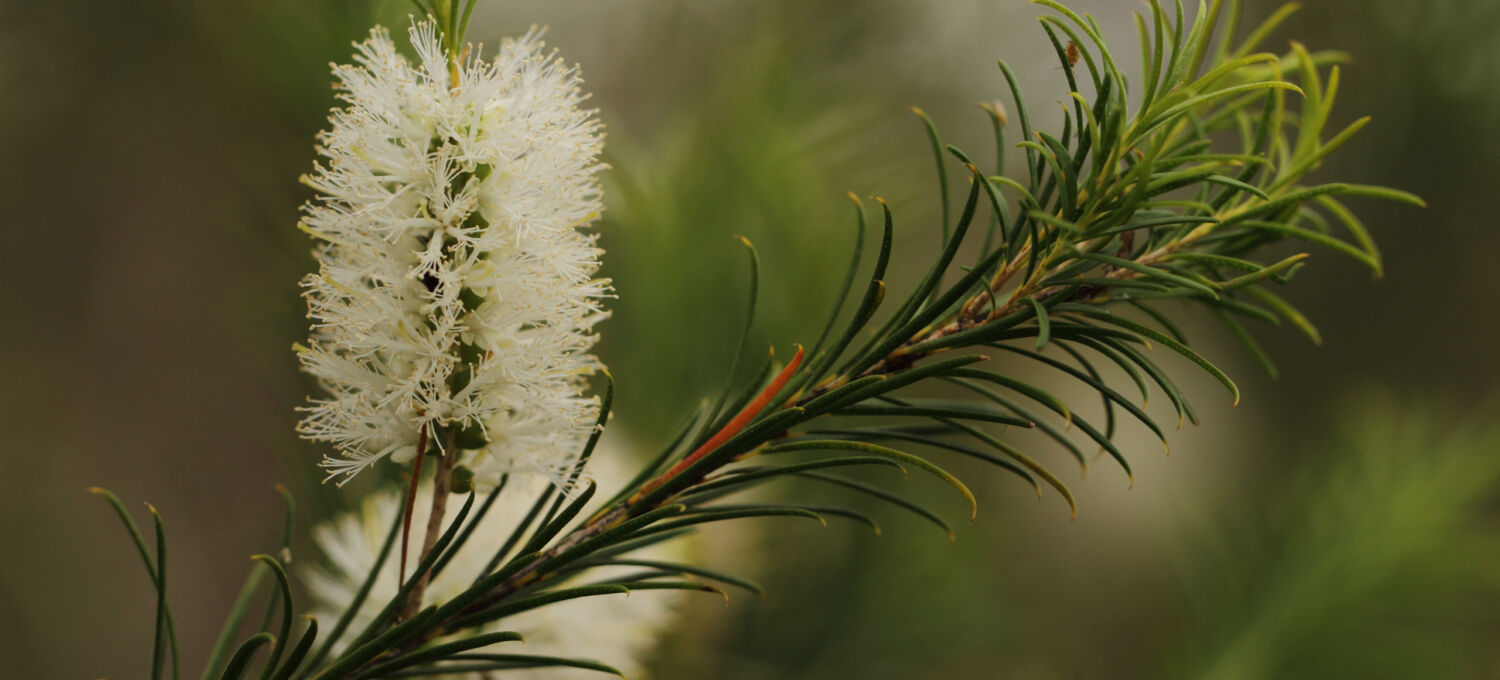
The Amazing Properties of Tea Tree
Tea tree oil is produced from the leaves of Melaleuca alternifolia, a small tree native to Australia, with a fresh, spicy-medicinal scent. Although it is known as ‘tea tree’, it is not related to the plant whose leaves are used to produce black tea. Tea tree oil has been used as a traditional medicine by the Aboriginal people of Australia for centuries to treat a whole range of conditions such as coughs and colds, viral infections, fevers and for wound healing.
Tea tree oil’s amazing germ-fighting properties make it a valuable natural remedy for preventing and treating all kinds of bacterial, viral and fungal infections, for boosting the immune system and to promote healing. This is a ‘must have’ oil to take with you on holiday or at home as it is a remarkable and versatile remedy – so I recommend always keeping a bottle to hand as part of your first-aid kit. Nowadays, it is one of the most popular aromatherapy oils employed internationally – and according to one Australian doctor, it is only a matter of time before tea tree oil is recognised as ‘the antiseptic of the future’.
Applications & Benefits of Tea Tree Essential Oil
One of the most immediate benefits of tea tree oil, is as an antiseptic to treat minor cuts and scrapes. When the skin is damaged, it is easier for germs to enter the system, especially in hot or humid climates. Tea tree acts as a natural disinfectant to disinfect minor abrasions, cuts, blisters or insect bites and prevents infection. Simply clean the area with witch hazel water or fresh water then apply a few drops of tea tree to the affected area and repeat a few times daily. Cover with a plaster if necessary to prevent any dirt from entering. Tea tree oil can also be used in combination with lavender oil and/or aloe vera gel for this purpose.
Due to tea tree oil’s antibacterial, antifungal and antioxidant properties, it also helps reduce pus, inflammation and swelling from developing, by triggering the activity of white blood cells that are essential for the healing process. It is also effective against many common fungal infections, such as athlete’s foot – which can easily be picked up in communal spaces.
Tea tree oil also makes an excellent natural hand sanitiser and disinfectant – it was tested as a general germicide in Australia in a solution of only 4 parts of essential oil to 1000 parts of water and shown to destroy most common bacteria found on the skin, making it invaluable also when travelling or out and about.
The oil is also extremely valuable against bronchitis, coughs, cold, flu and other respiratory infections, especially those that involve a fever, as it encourages sweating. In this case, place a few drops on a tissue and inhale slowly and regularly or place a few drops in a room diffuser.
Tea tree oil, like citronella can help keep insects away too and is an effective mosquito and ant repellent. A few drops applied directly also encourages ticks to loosen their grip before removal and preventing infection.
Further detailed Instructions for other applications and uses can be found in my book: ‘The Encyclopedia of Essential Oils.’
Scientific Research & Effectiveness of Tea tree Oil
Tea tree oil contains over 100 active constituents, notably:
- Terpinen-4-ol: antimicrobial and anti-inflammatory
- γ-Terpinene: antioxidant and antimicrobial
- α-Terpinene: broad-spectrum germ-fighting properties
- 1,8-Cineole: anti-septic and decongestant
It is the specific combination of constituents that account for its wide-ranging benefits which today have been studied scientifically. The first research project of this kind was carried out by Doctor Penfold in 1923, an Australian chemist, when he discovered the remarkable anti-septic and bacteria properties of tea tree oil. These were 13 times stronger than carbolic acid, the accepted antiseptic standard of the time. During the Second World War, it was included in the first-aid kits of the British army and navy, especially those posted in tropical regions. Then from the 1960s onwards, a mass of research studies took place on tea tree oil, focussing on its numerous benefits for conditions such as candida, ringworm, athlete’s foot, scabies, measles, influenza, respiratory complaints, wound healing, surgical and dental procedures, as well as for treating common skin and scalp conditions, including acne, dandruff, eczema and dermatitis.
Today is used in some hospitals to boost the immune system of patents awaiting surgery and in dental surgeries, to promote oral hygiene. Foremost among its properties compared to other remedies, is that it is active against all three varieties of infectious organisms i.e. bacteria, fungi and viruses. Independent microbiological testing has confirmed its effectiveness against a very wide range of micro-organisms –this is what makes it unique. Simply vaporising the oil stimulates an immune system response to create a protective environment which is a super easy way to rid any space of germs.
An all-purpose Hygiene/Hand Sanitiser Recipe:
Tea tree oil makes a great all-purpose cleaner that also sanitises surfaces – including for the hands – helping shield the body from germs and a range of viruses that can cause illness, including E. coli, S. pneumoniae and H. influenzae. In addition to protecting against bacteria and fungi, it may also help prevent transmission of coronaviruses.
This is an easy recipe for an all-natural cleaner or hand sanitiser:
- Combine 20 drops of tea tree oil, 3/4 cup witch hazel water and a 1/2 cup apple cider vinegar in a spray bottle.
- Shake well until thoroughly mixed.
- Spray directly onto surfaces and wipe clean with a dry cloth.
- Or add to hands to clean and naturally sanitise as required.
- Shake the bottle before each use to combine the tea tree oil with the other ingredients.
Further hygiene recipes for the body and home can be found in my books ‘The Botanical Home’ and ‘Mud, Salt + Medicine’.
Precautions when using Tea Tree oil
Tea tree oil is a natural alternative to many chemically based remedies and disinfectants, but it should always be used with care and generally in dilution. It should NEVER be taken internally. In addition, some people may experience skin irritation, a rash or another form of allergic reaction to it – so always do a patch test first. Prior to using tea tree oil for the first time, place 1 or 2 drops on your inner wrist and wait 24 hours to see if any reaction occurs.
NOTE: For those who are allergic or sensitized by tea tree oil, or simply find the scent too sharp and medicinal – fragonia oil (Agonis Fragrans) provides a pleasing alternative, having lovely slightly-spicy, lemony aroma.