
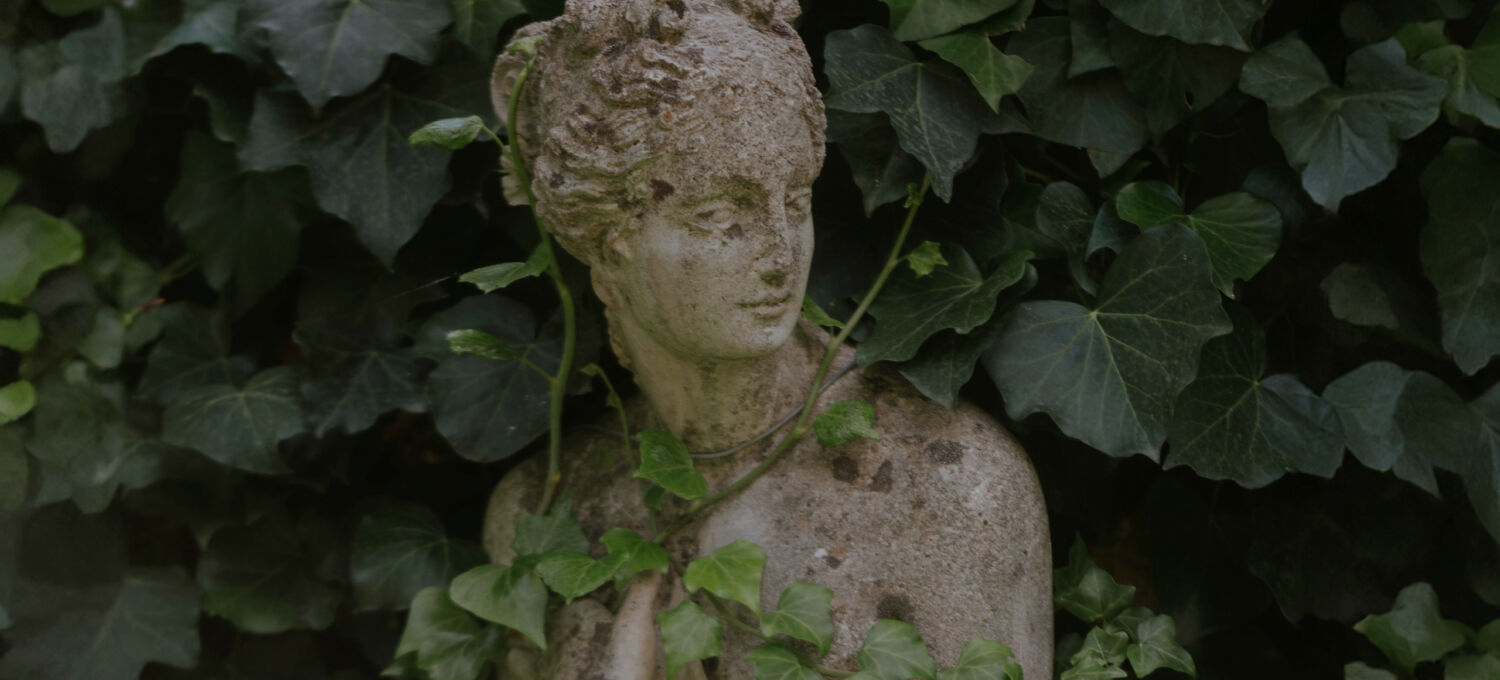
“The Great Mother who gives birth to all creation out of the holy darkness of her womb, became a metaphor for Nature herself, the cosmic giver and taker of life, ever able to renew Herself within the eternal cycle of life, death, and rebirth.”
– Marija Gimbutas, ‘Civilization of the Goddess’.
The Great Mother
The traditional practice of honouring motherhood is rooted in antiquity. The Great Mother is the most essential and awe-inspiring mythic embodiment of the timeless, elemental forces of nature. Every mythology features a representation of this great Goddess, who despite having different names and faces, was once revered as the primary life-giving source for all of creation. Archaeological evidence has revealed that practices of the Great Mother worship existed all over the world in ancient times, and that one of her earliest representations dates to the Palaeolithic period in Europe some 20,000 years ago. Sites related to the worship of Shakti, as the supreme feminine force, have been found in India, estimated to have been created around 9,000 BC.
It is known that the Mediterranean region adopted the Mother Goddess around 4000 BC as central to their matriarchal society and her worship was then revived around 2000 BC when she was considered above all as a nature Goddess, giving birth to and looking after all humans, plants and animals. This was also the case in Mesopotamia, the so-called cradle of civilization – and given the natural procreative potential of woman – it is easy to conceive why humanity’s first image of life and liberation, was the Great Mother.
The Source of all Life
The ancient Egyptians held an annual festival to honour their most important deity, the Goddess Isis, as patroness of nature and magic. During the Roman period, she became known as ‘Queen of the Universe’ and was believed to control the power of fate itself. In ancient Greece, the Mother Goddess was referred to as Gaia, as a visible representation of the living Earth. Her Roman name, ‘Terra’ meaning literally ‘Earth’, being the source of all life and the ground of our existence on this planet. As the great Goddess of Nature, she was thought to have existed from the beginning of time, giving birth to plants, mountains and rivers as well as all the planets. Beyond her role as the universal Mother, she was also considered to be the active and dynamic consciousness guiding and structuring the whole of creation. In later periods she was also worshipped as a spiritual liberator, for example as the Greek Sophia, meaning ‘holy wisdom’.
Celebration of Motherhood in Europe
But it was the emergence of the Goddess Cybele from ancient Anatolia (modern Turkey) who perhaps laid the most important basis for the celebration of motherhood in Europe. Cybele was fundamentally a Goddess of the natural world – mountains, forests, caverns and wild animals were her domain – and eventually both the Romans and Greeks simply referred to her as Magna Mater or the ‘Great Mother’. The Roman festival of Hilaria in honour of Cybele was celebrated in Spring between March 15th to 28th, which involved eating honey-cakes and offering flowers at dawn. It is no coincidence that this festival is close in proximity to the Vernal Equinox – when the first blossom appears and fresh green leaves adorn the trees, as all of nature wakes up – which always falls in March and when ‘Mother’s Day’ is celebrated in the UK.
The Spread of Christianity & origins of Mothering Sunday
By the 16th Century, as the cultural traditions in Europe and England gave way to the spread of Christianity, the ancient Roman Hilaria celebrations were merged with Lenten Sunday, the fourth Sunday of Lent, preceding Easter. Early English Christians initially used this day to honour the Virgin Mary, as Mother of Christ. Then in the 17th Century, this celebration was broadened to include ‘real’ mothers, and became known as Mothering Day, providing a welcome public holiday and a day of rest, especially for the poor. Mother’s Day also offered a reprieve from the fasting of Lent, when families came together and feasted, and mothers were presented with cakes and flowers.
Peace & Motherhood
The first North American Mother’s Day was conceived by Julia Ward Howe with her Mother’s Day Proclamation in 1870. Following the carnage of the Civil War, she asked for all mothers to come together to protest and called for an international celebration of peace and motherhood. In this way she planted a seed that would later blossom into what has become the modern-day Mother’s Day in the US. At the turn of the century, inspired by Julia Ward Howe, Anna Reeves Jarvis and her daughter campaigned for the creation of an official Mother’s Day in honour of international peace. Finally on May 10th, 1908, the first official Mother’s Day celebration took place in West Virginia – where white carnations were given to every mother in attendance – and in 1914, the second Sunday in May was officially declared as a national Mother’s Day holiday.
Today over 70 countries celebrate Mother’s Day! Some have adopted the U.S. version dedicated to world peace and humanitarianism, while others stem more in nature from the English Mothering Day tradition, with its roots in ancient Goddess worship. Today Mother’s Day in the UK continues in much the same way as the old tradition, with cards, cakes and flowers being offered as presents. This is the perfect occasion to honour both our human mother as well as the archetypal Great Mother – the primary embodiment of the nature, the earth and the environment – who urgently needs renewed respect at this time, in order to combat climate change and desecration of the natural world.
All of our 100% natural, botanical offerings at Aqua Oleum are gifts from Mother Nature herself, so we believe make the ideal presents to celebrate the divine feminine in all her manifestations. You can see some of our most popular Mother’s Day gifting items here.